 Sky
For more than two decades, supersonic passenger travel has been a cautionary tale rather than a growth market. Concorde, the only supersonic airliner to enter sustained commercial service, was retired in 2003 after a career defined as much by its operating losses as by its Mach 2 elegance. Its four afterburning turbojets drank fuel at prodigious rates, its airframe was maintenance-intensive, and its economics limited it to a handful of ultra-premium transatlantic routes. The lesson seemed clear: speed sells tickets, but not enough tickets to pay the bills.
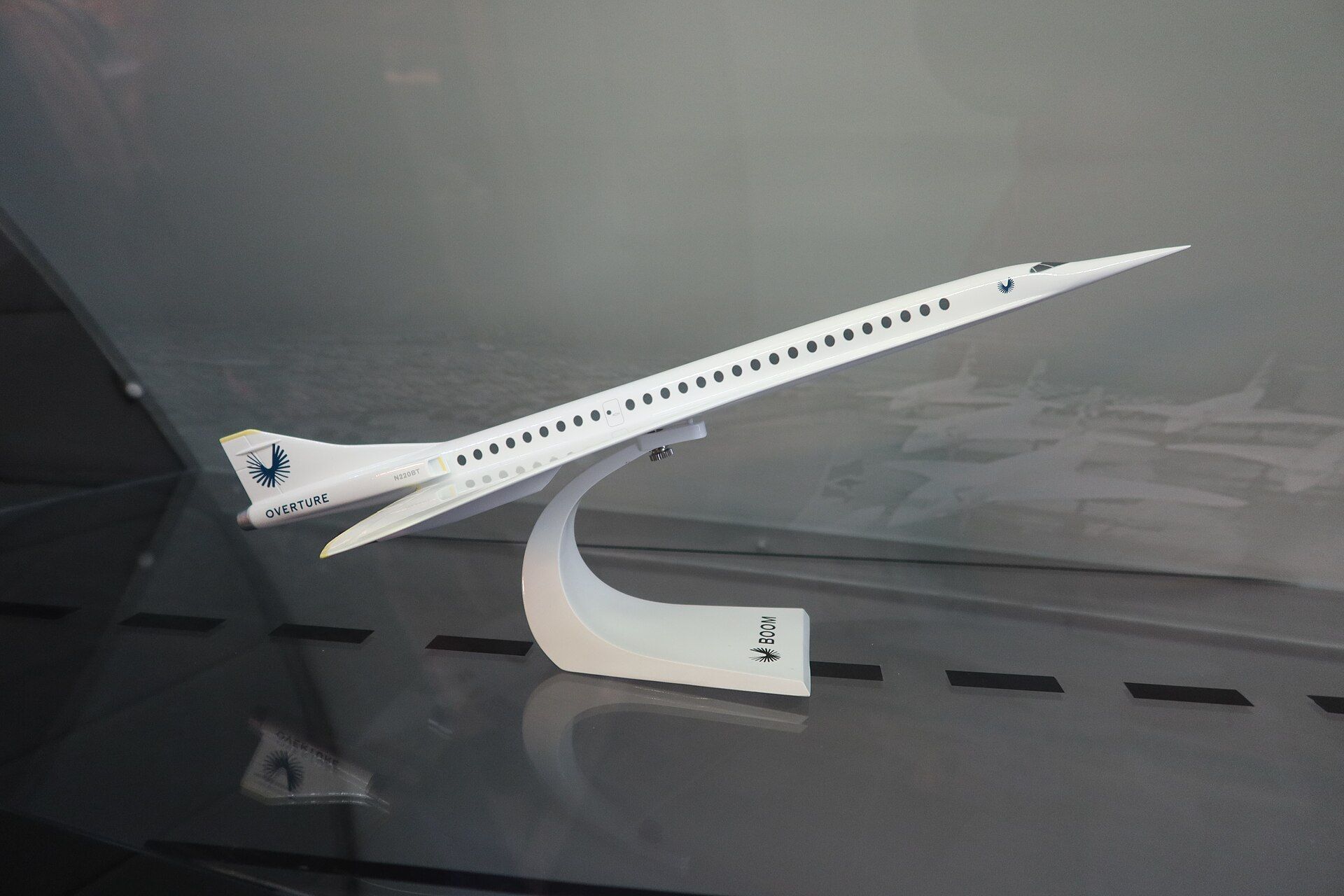
Boom Supersonic is betting that lesson was about the technology of the 1960s, not the physics of supersonic flight. The company's Overture airliner is being designed around a very different set of assumptions, and that is the core of the argument that it could become the first supersonic jet to offer genuinely affordable flights rather than a niche luxury product.
The background matters. Concorde was conceived in an era of cheap oil, state subsidy and national prestige, and it was engineered without the computational tools, materials science or engine architecture available today. Overture is being drawn against a market that has changed in fundamental ways. Passenger demand has grown enormously, premium cabins have become profit engines for long-haul carriers, and travelers have repeatedly demonstrated a willingness to pay for time savings on the right routes. At the same time, modern design and manufacturing methods — computational fluid dynamics, composite structures, digital twins, additive manufacturing — allow engineers to optimize for efficiency in ways Concorde's designers could only approximate.
The key facts of Boom's proposition rest on three pillars. First, propulsion: Overture is intended to fly just below Mach 2 using efficient, non-afterburning engines, avoiding the fuel penalty that defined Concorde's operation. Second, airframe and materials: a composite structure and refined aerodynamic shaping are meant to reduce weight and drag while lowering maintenance burden. Third, market positioning: rather than trying to fill a large aircraft at supersonic fares, Boom is targeting a smaller cabin focused on premium passengers and business routes where time savings carry the highest value. A smaller aircraft flying high-yield routes with better fuel efficiency changes the arithmetic that sank Concorde.
The industry implications are significant. If Overture's economics hold, supersonic capability could shift from a historical curiosity to a competitive differentiator for airlines seeking to win corporate travelers on transoceanic and long domestic corridors. That would put pressure on conventional long-haul business models, where premium revenue subsidizes the entire cabin. It would also reshape airport and route planning, since supersonic operations impose noise and sonic boom constraints that regulators are still working through. Boom's progress on its demonstrator aircraft and its engine program will be watched closely by manufacturers, lessors and carriers alike, because the credibility of the entire category now rests on proving that efficiency claims survive contact with certification and real-world operations.
There are reasons for caution. Certification of a clean-sheet supersonic airliner is a multi-year, capital-intensive endeavor, and the history of the sector is littered with ambitious programs that never reached production. Engine development is among the riskiest elements, and regulatory acceptance of overland supersonic flight remains unresolved in many jurisdictions. Affordability, too, is relative: tickets will still command a premium, even if the gap narrows.
The outlook is therefore promising but unproven. Boom's central insight — that modern technology and a premium-focused business model can make supersonic travel economically rational — is sound in principle and directly addresses why Concorde failed. Whether Overture becomes the first supersonic jet with affordable flights depends on execution: delivering the promised efficiency, clearing certification, and convincing airlines that speed is a durable source of margin. If it succeeds, the sound barrier becomes a business opportunity rather than a historical footnote.
Comments (0)
No comments yet. Be the first to share your thoughts.