 Sky
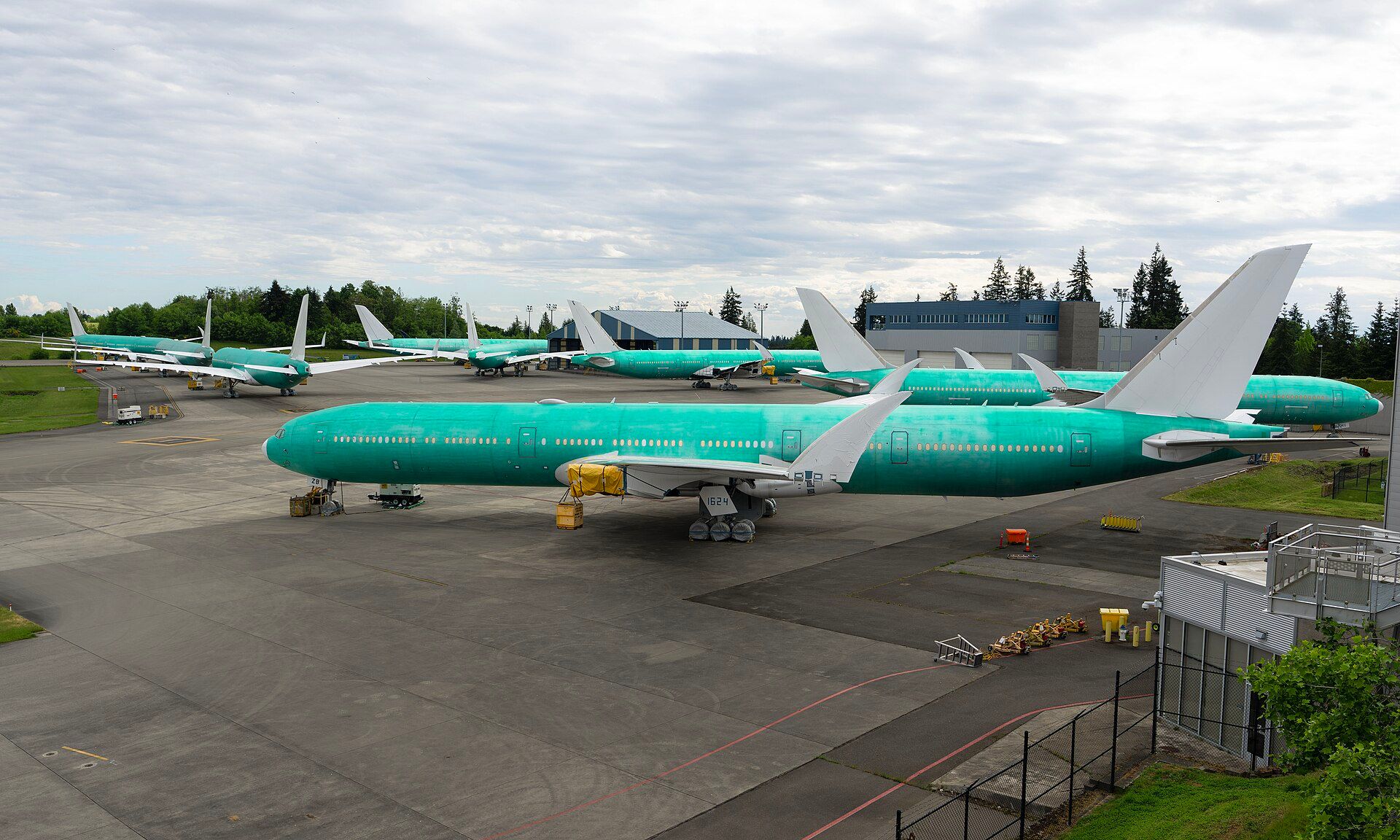
For more than a decade, the Airbus A350 has carried a quietly prestigious title through the world's long-haul fleet: the widest twin-engine widebody in service. That distinction is now on borrowed time. Boeing's 777X, the largest twinjet ever built, is edging toward certification and entry into service, and when it arrives it will take the crown the A350 has worn since its 2015 debut. The shift is more than a trivia footnote. Cabin width is one of the most consequential dimensions in commercial aviation, shaping seat comfort, airline revenue strategy and the passenger experience on the longest routes in the world.
The background matters here. The A350 was designed as Airbus's answer to Boeing's 777 and as a clean-sheet replacement for the aging A330 and A340 families. Its fuselage cross-section, at roughly 5.96 metres external width, was deliberately sized to allow nine-abreast economy seating in a 3-3-3 layout while still offering generous aisle and seat dimensions. For years that geometry gave Airbus a genuine marketing edge: the A350 could match the 777's nine-abreast economy density while offering a slightly wider cabin, and it became a favourite of carriers seeking a modern, fuel-efficient long-haul platform. Airlines including Qatar Airways, Singapore Airlines, Delta and Cathay Pacific built significant portions of their long-haul strategies around it.
Boeing's 777X changes the arithmetic. The new aircraft retains and refines the 777's wider fuselage, which measures around 6.2 metres across, and pairs it with folding wingtips, new GE9X engines and a composite wing. That extra cabin width is not merely cosmetic. It gives airlines the option of ten-abreast economy in a 3-4-3 configuration with seats and aisles that are, by the standards of modern long-haul travel, comparatively civilised. It also opens space for premium economy and business-class products that can be laid out more efficiently, and it allows carriers to squeeze more revenue-generating seats into the same fuselage length without resorting to the punishing densities that have become common on some twin-aisle types.
The industry implications run in several directions. For Airbus, losing the widest-twinjet title is a symbolic blow rather than an operational one; the A350 remains a highly efficient and commercially successful aircraft, and its order book is healthy. But symbols matter in sales campaigns, particularly in the premium long-haul segment where cabin comfort is a selling point. Boeing, meanwhile, gains a tangible differentiator at a moment when it badly needs one. The 777X programme has suffered years of delays, certification complications and scrutiny following the 737 MAX crisis, and a clear, passenger-visible advantage over the A350 helps Boeing reframe the aircraft as a generational leap rather than a late arrival.
For airlines, the decision between the two types will hinge on network economics rather than bragging rights. The 777X's size suits high-density trunk routes where slot constraints and premium demand justify a very large aircraft. The A350's slightly smaller footprint and broad family of variants give it flexibility across a wider range of missions. Airports also have a stake: the 777X's folding wingtips and greater wingspan require gate and taxiway compatibility work, and its higher maximum takeoff weight places demands on runway and pavement infrastructure at some fields.
Passengers, as ever, will experience the difference at the seat. The 777X's wider cabin gives airlines room to offer more comfortable ten-abreast seating, but it does not guarantee they will. The history of widebody economics is a history of airlines using extra space to add seats rather than legroom, and the 777X will be no exception where competitive pressure is intense. The A350's nine-abreast layout, meanwhile, remains one of the more comfortable long-haul economy experiences available, which is why some carriers have resisted densification.
The outlook is therefore more nuanced than a simple changing of the guard. Boeing's 777X will indeed become the widest twinjet in service once deliveries begin, and that will reset the benchmark for cabin geometry in the large widebody class. But the A350's days as a market force are far from numbered. The two aircraft will compete for years across overlapping mission profiles, and the real contest will be fought over operating economics, delivery reliability and the willingness of airlines to pass extra width on to passengers rather than to their balance sheets. The title may change hands; the argument over how to use all that space will not.
Comments (0)
No comments yet. Be the first to share your thoughts.