 Sky
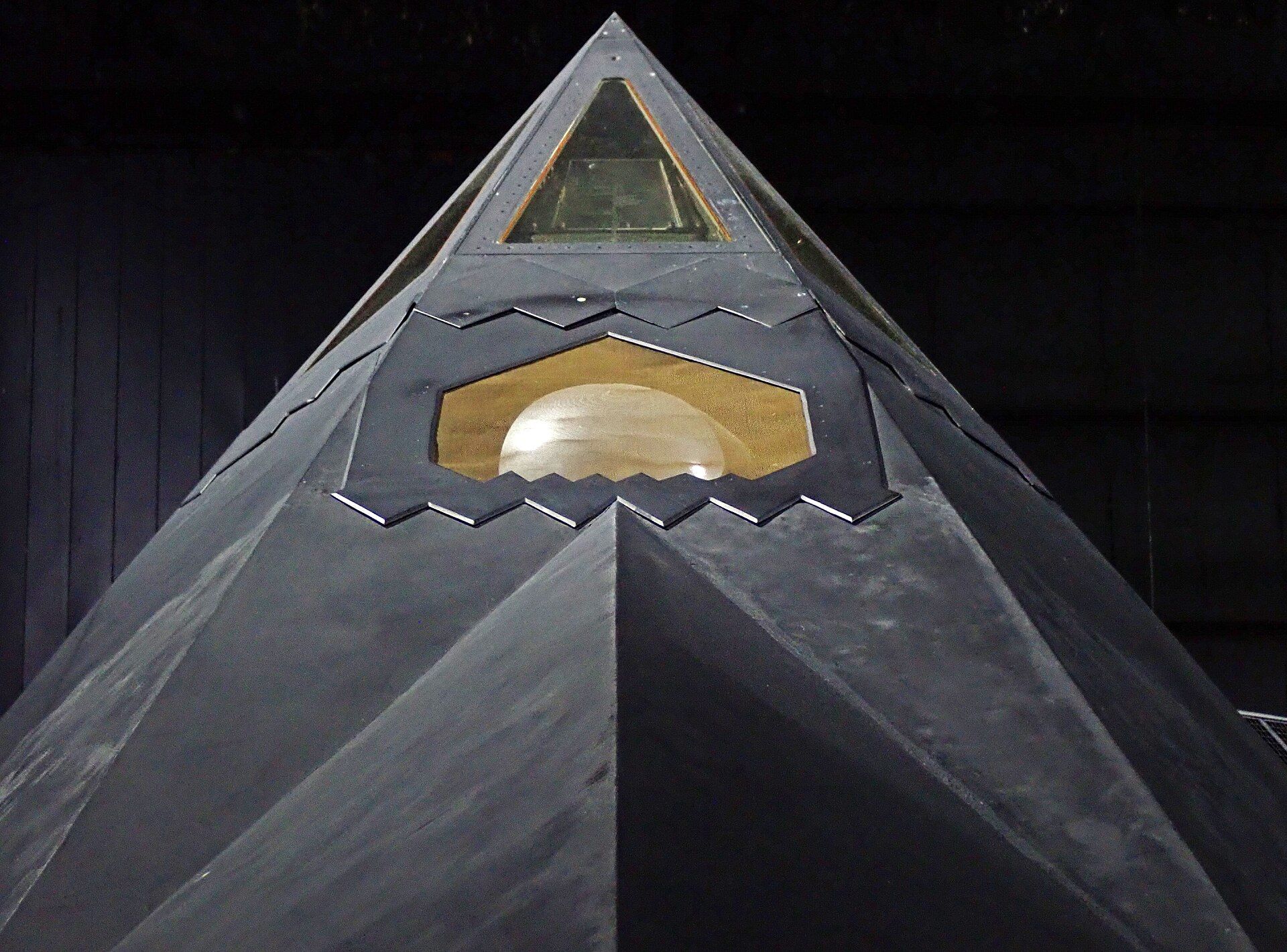
The Lockheed F-117 Nighthawk has long occupied an unusual place in aviation history. It was the world's first operational aircraft designed around stealth, yet it was retired from frontline service before many of the platforms that followed it had even entered production. Now one particular airframe, celebrated for a combat career spanning four separate conflicts, has been inducted into the Smithsonian's Steven F. Udvar-Hazy Center, cementing its status as one of the most storied examples of military aviation ever built.
The story of the Nighthawk begins in the shadows of the Cold War. Developed by Lockheed's legendary Skunk Works under a veil of secrecy so tight that even many senior Pentagon officials were unaware of its existence, the aircraft first flew in 1981. Its faceted, angular airframe was a radical departure from conventional aerodynamics, engineered to deflect radar energy rather than rely on speed or agility for survival. The F-117 was not a fighter in any traditional sense; it carried no radar of its own and had limited air-to-air capability. Its purpose was to slip through dense air-defense networks and deliver precision-guided munitions against high-value targets, a mission it performed with remarkable effect.
The type entered combat in dramatic fashion during Operation Desert Storm in 1991, striking targets in the heart of Baghdad while coalition planners watched the Iraqi capital's air defenses struggle to respond. Although the Nighthawk fleet flew only a small fraction of the total sorties in that campaign, it was credited with a disproportionate share of strategically significant hits. That debut established the template for stealth operations that subsequent generations of aircraft would follow.
What sets the newly inducted airframe apart is its extraordinary longevity in combat. According to the source reporting, this is the only F-117 to have flown combat missions across four distinct conflicts, a distinction that makes it a genuine outlier even within a fleet already known for punching above its weight. The aircraft's service record spans the post-Cold War era, encompassing operations in the Balkans, the Middle East, and beyond, reflecting the Nighthawk's enduring utility long after its technological novelty had faded. Each of those deployments added a layer of operational experience to an airframe that was, in many ways, a bridge between the analog bombing campaigns of the 1980s and the precision-strike doctrine that dominates modern warfare.
The F-117 was officially retired from active U.S. Air Force service in 2008, though a small number have continued to fly in various test and research roles. The decision to preserve this particular aircraft at the Udvar-Hazy Center is significant for several reasons. The museum, located adjacent to Washington Dulles International Airport in Virginia, has become the premier destination for iconic military and commercial aircraft, housing everything from the SR-71 Blackbird to the Space Shuttle Discovery. Adding a combat-proven Nighthawk to that collection reinforces the aircraft's place in the canon of aerospace innovation and gives visitors a tangible connection to a program that reshaped how nations think about air power.
For the industry, the induction is more than a ceremonial honor. The F-117 remains a case study in how radical design can deliver asymmetric advantage, and its legacy is visible in every low-observable platform fielded since. Defense contractors continue to draw lessons from the Nighthawk's development model, which prioritized secrecy, rapid prototyping, and operational testing under extreme pressure. The aircraft also serves as a reminder that stealth is not a permanent shield; advances in counter-stealth sensing and networked air defense have eroded some of the advantages the F-117 once enjoyed, driving the shift toward broader, multi-domain approaches to survivability.
Looking ahead, the Smithsonian's acquisition ensures that future generations of engineers, historians, and aviation enthusiasts will be able to study the Nighthawk up close. As the U.S. military retires or phases out several legacy platforms and invests heavily in next-generation systems, the F-117's story offers a cautionary and inspirational narrative: a machine born in secrecy, proven in four conflicts, and now preserved as a symbol of American aerospace ambition. Its arrival at Udvar-Hazy is a fitting final mission for an aircraft that spent its career avoiding the spotlight.
Comments (0)
No comments yet. Be the first to share your thoughts.