 Sky
Sky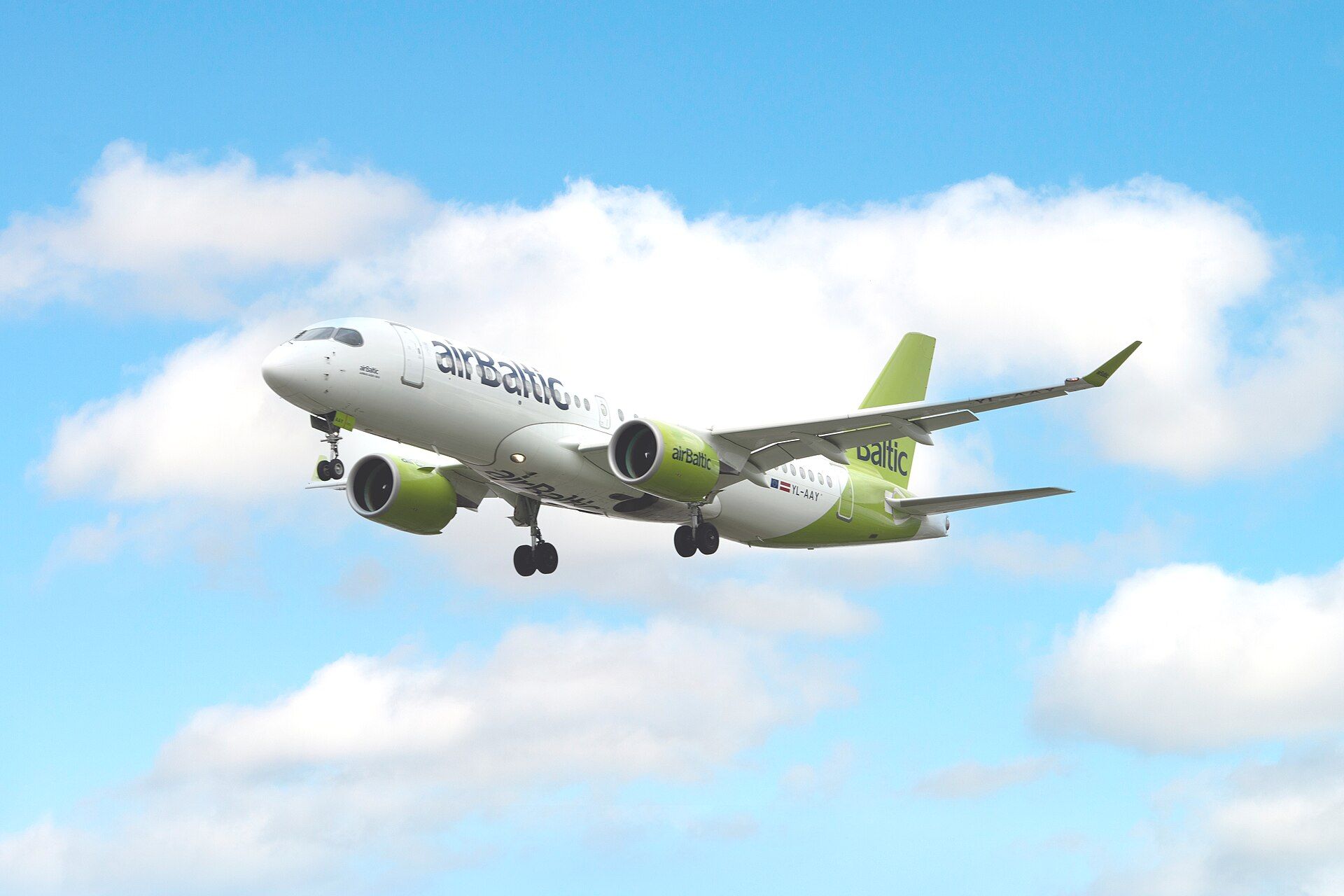
When Airbus introduced the A220—originally designed by Bombardier as the CSeries—it was marketed as a highly efficient regional jet, ideal for short-haul routes. But airBaltic, the launch operator and largest A220-300 operator, has consistently pushed the aircraft beyond its perceived limits. The Latvian carrier now routinely flies its A220-300s on sectors approaching 3,000 miles, including services from its Riga hub to Tenerife in the Canary Islands and Dubai in the United Arab Emirates. These ultra-long missions for a 'regional' jet are raising eyebrows and rewriting assumptions about what the A220 can do.
Background: airBaltic's all-A220 strategy
airBaltic retired its last Boeing 737 and Bombardier Q400 in 2020, becoming the world's first all-A220 airline. The move was bold: the carrier bet its future on a single fleet type, citing the A220's fuel efficiency, passenger comfort, and range flexibility. With 50 A220-300s in service and more on order, airBaltic has leveraged the type's 3,350-nautical-mile range to open routes that would be unthinkable for a typical regional jet. The airline's network now stretches from the Nordics to the Middle East and North Africa, with seasonal leisure routes to the Canary Islands and year-round service to Dubai.
Key facts: The ultra-long missions
The Riga–Tenerife South route covers approximately 2,900 miles (4,670 km) and can take over seven hours, depending on winds. Riga–Dubai is similarly lengthy at around 2,800 miles (4,500 km). These are not mere ferry flights; they are scheduled passenger services, often operating with high load factors. The A220-300's range allows airBaltic to serve these destinations nonstop, bypassing the need for a larger widebody or a fuel-hungry older narrowbody. Notably, the aircraft's economics remain favorable even on these long sectors, thanks to its Pratt & Whitney GTF engines and lightweight composite wings. However, the flights do push the A220's design parameters: passengers endure narrowbody comfort for seven-plus hours, and crew duty times approach regulatory limits.
Industry implications: Redefining the 'regional' label
airBaltic's use of the A220 on near-3,000-mile routes challenges the traditional segmentation of aircraft. The A220 was conceived for short-haul, high-frequency operations, but its range and efficiency make it a viable long-haul tool for niche markets. This has implications for airlines worldwide. For one, it blurs the line between regional and mainline aircraft, potentially reducing the need for larger narrowbodies like the A320 or 737 on thin long-haul routes. It also puts pressure on Boeing, which lacks a direct competitor to the A220-300; the 737-7 MAX is larger and less efficient on such missions. Moreover, it demonstrates that point-to-point long-haul flying is feasible with smaller aircraft, a trend that could reshape hub-and-spoke networks. Airports like Tenerife South and Dubai gain connectivity to secondary European cities without relying on widebody operators.
Outlook: More ultra-long A220 flights on the horizon?
As airBaltic continues to expand its A220 fleet—and as other operators like Air Canada, Delta, and Breeze Airways explore the type's capabilities—the aircraft's role will likely grow. Airbus is studying a larger A220-500 variant that could further extend range and capacity. For now, airBaltic's long-haul A220 experiments serve as a real-world proving ground. If these routes remain profitable, expect more airlines to deploy the A220 on similarly lengthy missions, further eroding the 'regional' tag. The A220 may be small, but its ambitions are anything but.
Comments (0)
No comments yet. Be the first to share your thoughts.